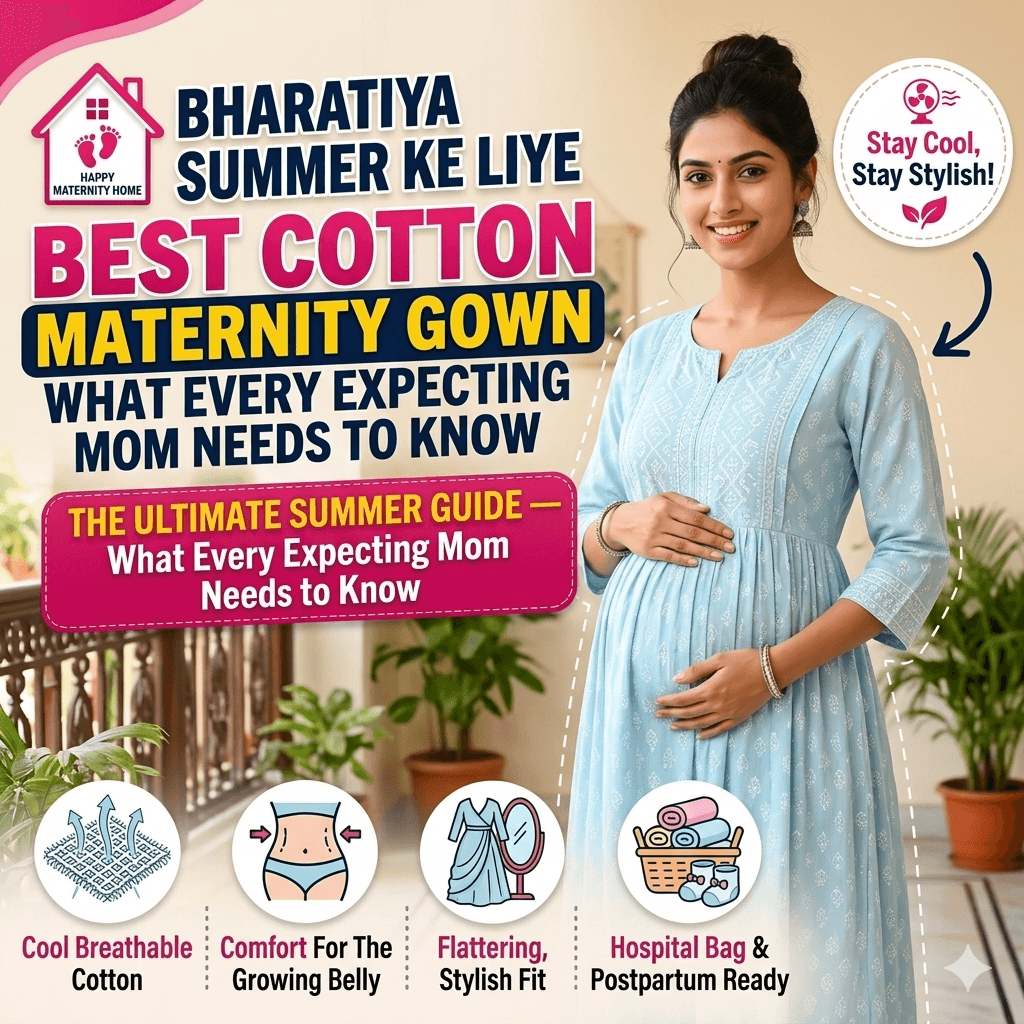
The first week after delivery, most new moms wear whatever is closest and easiest. Not out of laziness — because nothing in the wardrobe actually works for breastfeeding. A feeding gown changes that. Here’s what to know before you buy one.
Your old kurtas need two hands and full consciousness to open. Your nighties have no opening at all. And you’re feeding every two hours — including at 3am, including on days when you’ve slept a total of four hours. The last thing you need is clothing that fights back.
A feeding gown sounds like a small thing. In that phase, small things matter a lot.
Why Regular Nightwear Doesn’t Work for Breastfeeding
Most Indian women don’t own feeding-specific clothes before their first baby. You’re busy buying the cot, the diapers, the swaddle blankets. The gown feels optional.
It isn’t, really.
The issue is access. A standard kurta or nighty means pulling fabric up or down, fumbling with buttons, or partially undressing — every single feed. When you’re doing that 8 to 10 times a day, it wears on you. Add summer heat, post-partum sweating, and a baby who loses patience fast, and the wrong outfit genuinely adds stress to an already demanding situation.
A feeding gown has discreet openings — usually hidden zips, snap buttons, or layered panels — built into the chest area. You can feed without rearranging the whole garment. That’s the entire value, and it’s enough.
What Actually Matters When Buying One in India
Cotton is non-negotiable for most of the year. From March through October, synthetic fabrics are uncomfortable for feeding. You’re warmer than usual, you may have post-partum night sweats, and the baby is pressed against you for long stretches. Pure cotton or a cotton-modal blend breathes. Rayon looks good on a hanger but traps heat. Skip it.
The opening type changes the experience. There are three common styles:
Side-zip — Most practical for nighttime feeds. Opens with one hand while the other supports the baby.
Snap buttons — Quieter, won’t snag on anything, slightly slower to open.
Wrap-front — Most elegant, great for daytime wear. Sizing matters more here — less forgiving of fit errors.
Buy one size up from your pre-pregnancy size. Your chest size changes with milk supply and doesn’t follow a predictable schedule. A gown that fits at two weeks may be tight at six. A little extra room is always the right call.
Length depends on how you’ll use it. Full-length gowns work best for sleeping. Knee or midi length is more practical if you’re moving around the house or wearing it through the day.
The Indian Context: What Changes Here
A lot of feeding wear advice online comes from Western markets — priced high, in neutral colours, designed for cold climates. It doesn’t always translate.
In India, you want:
Deep colours or prints over whites and pastels. Milk stains are real. Dark florals and block prints hide them without you noticing.
Cotton that survives repeated washing. Fabric that pills or shrinks after ten washes is not worth buying, however pretty it looks.
Modest necklines for joint family situations. Many new moms in India are breastfeeding in shared spaces — around in-laws, with visitors arriving. A gown with a discreet opening and a fuller cut makes feeding less awkward in company.
What to Look For at Punjabi Libas
The Indian market for maternity wear has genuinely improved. A few years ago, feeding gowns were clinical-looking and sold mostly in hospital supply shops. Now you can find options that are actually pretty — cotton gowns with lace detailing, floral prints, embroidered edges.
At Punjabi Libas, our feeding gowns are designed specifically for Indian climates and Indian body types. Our Blue Floral Cotton Maternity & Feeding Gown is one of our most-ordered pieces — pure cotton, side-zip opening that works one-handed, and a floral print that hides milk stains without any effort on your part. Full length, comfortable for sleeping, not so heavy that it gets warm.
If you want something that works through feeds during the day as well as at night, our cotton options are cut modestly enough to wear around family — and designed to not look like hospital wear.
How Many Do You Actually Need?
Two or three gets most new moms through the early months comfortably.
One for night. One for daytime-around-the-house. One in the wash. That’s the rotation. You don’t need ten. The early phase of feeding is intense but it doesn’t last forever — most moms transition out of exclusive breastfeeding by six months, and by then you’ll have more flexibility in what you wear. Two quality cotton gowns beat five cheap ones that fall apart by week three.
Nobody talks about how much post-partum recovery is affected by small daily irritations. Bad clothes are a small daily irritation. Getting dressed shouldn’t be one more thing that’s harder than it needs to be. A feeding gown won’t fix the sleep deprivation — but it quietly removes one small friction from a time when you don’t have energy to spare for friction. That’s enough reason to own one.
Looking for feeding-friendly gowns made for Indian weather and Indian sizes?
Shop Our Feeding Gown Collection →